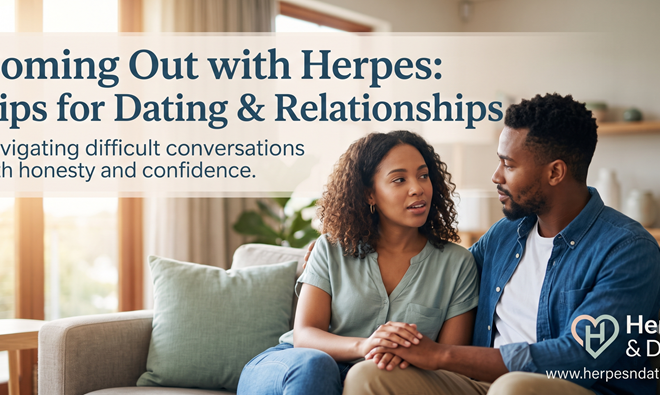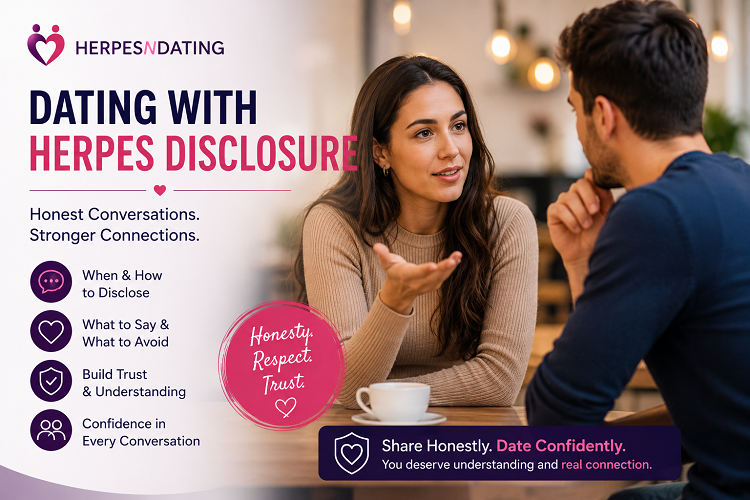
Dating can feel exciting, hopeful, and sometimes nerve-racking. When you are living with herpes, one concern often rises above the rest: disclosure. Knowing when to tell someone, what to say, and how they might respond can create anxiety long before a relationship becomes physical.
The truth is that dating with herpes disclosure does not have to be overwhelming. Honest conversations, thoughtful timing, and accurate information can help you build trust while protecting both your emotional well-being and your partner’s ability to make informed decisions.
Many healthy relationships begin with vulnerable conversations. Herpes does not remove your ability to date, connect, or find lasting companionship.
Educational Note: This article provides general relationship and sexual health education and is not medical advice. For personal health guidance, consult a qualified healthcare professional.
Understanding Herpes and Dating
Herpes (HSV-1 or HSV-2) is one of the most common viral conditions worldwide. Millions of people carry it—many without even knowing.
Despite this, stigma still exists. That stigma—not the condition itself—is often the biggest challenge in dating.
What matters in dating:
- Herpes is manageable
- Transmission risk can be reduced significantly
- Many people are open-minded when approached honestly
When you understand this, disclosure becomes less about fear—and more about building trust.
When Should You Tell Someone You Have Herpes?
Timing matters.
Too early, and the conversation may feel unnecessarily intense before emotional connection develops. Too late, and trust may feel damaged.
A practical guideline is to disclose before physical intimacy, when there is enough rapport for respectful conversation.
Good timing may include:
- After a few meaningful conversations
- When mutual romantic interest becomes clear
- Before kissing if oral HSV risk is relevant
- Before sexual contact
- Before exclusivity discussions if intimacy is expected
Poor timing examples:
- During sexual escalation
- Immediately after physical intimacy begins
- During arguments
- In emotionally chaotic moments
- When either person feels pressured
Thoughtful timing improves communication.
When Should You Disclose Herpes?
There’s no single “perfect” moment—but timing matters.
The best time to tell someone:
- Before becoming physically intimate
- After you’ve built some level of comfort and trust
- When the conversation feels natural—not forced
Avoid:
- Telling someone immediately upon meeting
- Waiting until the last second before intimacy
- Sharing during a stressful or emotional moment
A balanced approach:
Many people find success telling their partner after 2–4 dates, once there’s clear mutual interest.
This gives the other person context—they’re getting to know you, not just your condition.
How to Tell Someone You Have Herpes
Disclosure works best when communication is direct, calm, and respectful.
In-Person Disclosure
Face-to-face conversations often allow better emotional clarity.
Example:
“I’ve really enjoyed getting to know you, and because honesty matters to me, I want to share something before our relationship becomes physical. I’m living with herpes and manage it responsibly. If you’d like, we can talk openly about any questions or concerns.”
Why this works:
- honest
- calm
- respectful
- non-alarming
- invites discussion
Text Message Disclosure
Text can work if in-person conversation feels difficult.
Example:
“I’ve really enjoyed talking with you. Before things become physical, I want to be transparent about something personal. I have herpes, which I manage responsibly. If you want to talk about it or ask questions, I’m happy to be open.”
Text disclosure gives both people time to process.
Phone or Video Conversation
This can be useful when dating long-distance or online.
Voice conversations allow emotional nuance while reducing face-to-face pressure.
What to Say (Real Conversation Examples)
Here are practical, natural ways to approach disclosure:
Direct Approach:
“Before things go further, I want to share something important. I have herpes, and I manage it carefully. I’d like to talk about it openly.”
Casual Approach:
“I’ve really enjoyed spending time with you. I think honesty matters, so I want to let you know I have herpes. It’s something I handle responsibly.”
Reassuring Approach:
“I want you to know I have herpes, but I also want you to know it doesn’t define me. I take care of my health and I’m happy to talk about it.”
How People Usually React
Many people expect the worst, but real experiences tell a different story.
Common reactions:
- Curiosity (“Can you tell me more?”)
- Appreciation (“Thanks for being honest”)
- Neutral (“I need time to think”)
- Acceptance (“That’s okay with me”)
Rejection can happen—but it’s not as common as fear makes it seem.
And if someone reacts negatively, it often reflects their lack of understanding—not your worth.
Reducing Transmission Risk
One of the biggest concerns in disclosure is transmission. The good news: risk can be significantly reduced.
Ways to lower risk:
- Using protection
- Taking antiviral medication
- Avoiding contact during outbreaks
- Being aware of symptoms
When you explain this clearly, it helps your partner feel more informed and comfortable.
Building Confidence After Diagnosis
Confidence plays a huge role in dating success.
Ways to rebuild confidence:
- Educate yourself about herpes
- Connect with supportive communities
- Focus on your strengths beyond your condition
- Practice disclosure conversations
Remember: herpes is just one small part of your life—not your identity.
Dating Someone New: What to Expect
Dating with herpes doesn’t mean settling or limiting your options.
What changes:
- More intentional conversations
- Stronger emotional connections
- Greater honesty
What doesn’t change:
- Your ability to attract someone
- Your worth in relationships
- Your chance at love
Many people find their relationships become more meaningful after learning to communicate openly.
Common Mistakes to Avoid
1. Over-Apologizing
You didn’t do anything wrong. Avoid framing disclosure as a confession.
2. Sharing Too Much Too Soon
Keep it simple—don’t overwhelm your partner with medical details.
3. Waiting Too Long
Delaying disclosure can damage trust if things progress.
4. Assuming Rejection
Give people a chance to understand and respond.
The Emotional Side of Disclosure
It’s normal to feel:
- Nervous
- Vulnerable
- Unsure
But disclosure is also empowering.
You’re choosing honesty, respect, and courage, all qualities that build strong relationships.
How to Handle Rejection
Rejection is part of dating—for everyone.
If someone isn’t comfortable:
- Respect their decision
- Don’t take it personally
- Move forward with confidence
The right person will value you for who you are—completely.
Can Relationships Still Work After Disclosure?
Absolutely.
Many successful relationships begin with honest herpes disclosure.
Trust often grows when someone sees:
- honesty
- emotional maturity
- respect for consent
- willingness to communicate openly
Strong relationships are built on communication, not perfection.
Finding Supportive Dating Spaces
Dating with herpes can feel isolating if stigma has affected your confidence.
Meeting people who understand disclosure conversations may make dating feel less stressful.
Herpes-friendly communities can help people:
- connect with informed singles
- reduce anxiety around disclosure
- build confidence
- create meaningful relationships
Frequently Asked Questions (FAQ)
1. When should I disclose herpes in dating?
Before physical intimacy, once trust and interest are established.
2. Can I date without disclosing herpes immediately?
Yes—but you should disclose before things become physical.
3. Will people reject me because of herpes?
Some might—but many people are understanding and accepting.
4. How do I reduce the risk of transmission?
Use protection, take medication, and avoid intimacy during outbreaks.
5. Is it possible to have a normal relationship with herpes?
Absolutely. Many people have healthy, happy relationships.
Final Thoughts
Dating with herpes disclosure may feel intimidating at first, but honest communication creates stronger foundations than secrecy ever will.
The goal is not perfection.
The goal is trust, consent, respect, and emotionally healthy connection.
The right conversation may feel uncomfortable for a moment, but it can open the door to something genuine.