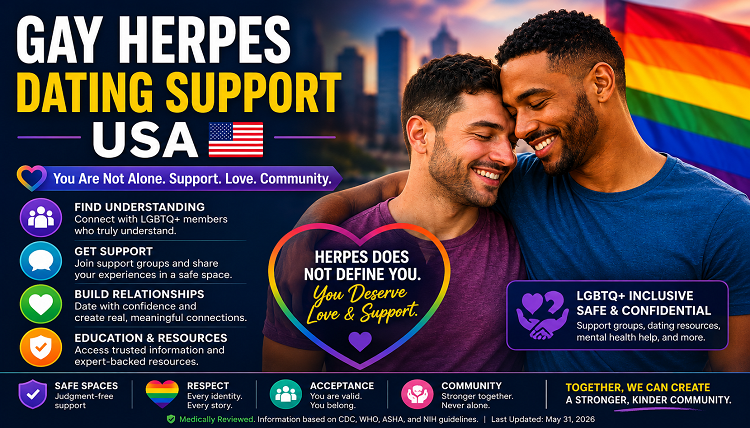
Gay Herpes Dating Support USA: LGBTQ+ Resources, Relationships, and Community
Last Updated: May 31, 2026
Receiving a herpes diagnosis can feel overwhelming, especially when questions about dating, relationships, disclosure, and long-term emotional well-being begin to surface. For many gay men and LGBTQ+ individuals, herpes-related concerns can overlap with existing experiences surrounding identity, acceptance, and community connections.
While stigma often receives more attention than the condition itself, herpes simplex virus (HSV) is one of the most common viral infections worldwide. According to the World Health Organisation (WHO), approximately 3.8 billion people under age 50 live with HSV-1 globally, while more than 500 million people ages 15–49 live with HSV-2.
A herpes diagnosis does not prevent someone from building meaningful relationships, maintaining a healthy sex life, or participating fully in LGBTQ+ communities. Across the United States, support groups, healthcare organizations, online communities, and dating platforms help thousands of LGBTQ+ individuals navigate life with HSV confidently.
Medical Review Notice
This article was researched using guidance from the Centres for Disease Control and Prevention (CDC), World Health Organisation (WHO), American Sexual Health Association (ASHA), National Institutes of Health (NIH), and other reputable sexual health resources.
The information provided is intended for educational purposes only and should not replace professional medical advice, diagnosis, or treatment.
Understanding Herpes in LGBTQ+ Communities
Herpes simplex virus affects people regardless of sexual orientation, gender identity, age, race, or relationship status.
Two primary types of herpes simplex virus exist:
HSV-1
HSV-1 is commonly associated with oral herpes and cold sores around the mouth. However, it can also be transmitted to the genital area through oral sex.
HSV-2
HSV-2 is most commonly associated with genital herpes. Symptoms vary significantly from person to person, and many individuals never experience noticeable outbreaks.
According to the CDC, many people living with HSV are unaware they carry the virus because symptoms may be mild or absent.
For many LGBTQ+ individuals, the emotional impact of herpes often comes from social stigma rather than physical symptoms. Concerns about rejection, disclosure, and misconceptions surrounding sexually transmitted infections can create unnecessary stress and anxiety.
Unique Challenges Gay Men May Face After a Herpes Diagnosis
Although herpes affects people from every demographic group, some gay men report facing specific concerns after diagnosis.
These concerns may include:
- Fear of rejection while dating
- Anxiety surrounding disclosure conversations
- Concerns about sexual intimacy
- Reduced confidence and self-esteem
- Worries about future relationships
- Internalized stigma
- Misunderstanding about transmission risks
These reactions are normal. Mental health professionals frequently emphasise that emotional adjustment takes time and that support from informed communities can significantly improve confidence and overall well-being.
Why Community Support Matters
Research consistently shows that social support improves mental health outcomes following health-related diagnoses.
Connecting with others who understand HSV-related experiences can help individuals:
- Reduce feelings of isolation
- Build confidence in dating
- Improve disclosure communication
- Learn practical management strategies
- Challenge negative self-perceptions
- Develop healthier coping skills
Supportive communities remind people that herpes is a medical condition—not a personal failure or character flaw.
LGBTQ+ Herpes Dating Resources in the United States
Many LGBTQ+ individuals prefer connecting with people who understand the realities of living with HSV.
PositiveSingles
PositiveSingles is one of the largest dating communities for individuals living with herpes and other sexually transmitted infections.
Features often include:
- LGBTQ+ member matching
- Private messaging
- Community forums
- Educational resources
- Dating safety guidance
MPWH LGBTQ+ Community
MPWH provides dedicated spaces for gay, bisexual, transgender, queer, and non-binary individuals living with herpes.
The platform focuses on:
- Community support
- Relationship building
- Dating opportunities
- Sexual health education
HSV Support Communities
Numerous online herpes support communities provide discussion forums where individuals can ask questions about:
- Dating
- Disclosure
- Treatment options
- Relationships
- Emotional wellness
These communities often provide valuable peer-to-peer support while reducing feelings of isolation.
Support Groups for Gay Men Living With Herpes
Many individuals find support groups helpful after diagnosis.
Support groups provide opportunities to:
- Share personal experiences
- Learn from others
- Discuss dating concerns
- Receive emotional support
- Build confidence
Both virtual and in-person groups are available throughout the United States.
Some groups focus specifically on:
- LGBTQ+ individuals
- Gay men
- Newly diagnosed individuals
- Long-term HSV management
- Mental health support
The American Sexual Health Association (ASHA) provides information about herpes support resources and educational programs for individuals looking for additional guidance.
Mental Health and Emotional Well-Being
The emotional impact of herpes deserves as much attention as physical symptoms.
Studies published through the National Institutes of Health (NIH) have shown that stigma associated with sexually transmitted infections can affect:
- Self-esteem
- Dating confidence
- Anxiety levels
- Relationship satisfaction
- Mental health
Common Emotional Reactions
Many newly diagnosed individuals experience:
- Shock
- Embarrassment
- Fear
- Anger
- Sadness
- Relationship anxiety
These emotions are understandable and often improve as individuals gain accurate information and supportive connections.
LGBTQ+-Affirming Therapy
Working with an LGBTQ+-affirming therapist can help individuals:
- Process diagnosis-related stress
- Address self-stigma
- Improve confidence
- Develop communication skills
- Strengthen relationships
Professional support can be particularly beneficial when herpes-related concerns begin affecting daily life or emotional well-being.
Dating Successfully With Herpes
A herpes diagnosis does not eliminate opportunities for love, intimacy, or long-term relationships.
Many people living with HSV maintain healthy and fulfilling partnerships.
Focus on Communication
The American Sexual Health Association recommends honest communication with partners before sexual activity.
Disclosure discussions may feel intimidating initially, but many people discover that openness strengthens trust and emotional connection.
Learn the Facts
Accurate information helps reduce fear.
Understanding:
- Transmission risks
- Treatment options
- Outbreak management
- Preventive measures
can make dating conversations significantly easier.
Avoid Self-Stigma
Many individuals judge themselves far more harshly than others do.
Herpes is a common medical condition—not a reflection of attractiveness, responsibility, or relationship value.
Build Confidence First
Confidence often grows through education, support groups, therapy, and positive social experiences.
Many people report that dating becomes easier once they stop defining themselves by their diagnosis.
Managing Herpes Responsibly
Modern treatment options allow many people to manage HSV effectively.
Antiviral Medication
The CDC notes that antiviral medications such as:
- Acyclovir
- Valacyclovir
- Famciclovir
can help reduce outbreaks and lower transmission risk.
Recognizing Symptoms
Learning to identify outbreak symptoms helps individuals take appropriate precautions.
Regular Medical Care
Routine healthcare visits support:
- Sexual health
- Symptom management
- Treatment planning
- Overall wellness
Partner Communication
Healthy relationships are built on trust, communication, and informed decision-making.
Discussing boundaries, risks, and preferences allows couples to make choices together.
Reducing Herpes Stigma in LGBTQ+ Communities
Education remains one of the most effective tools for combating stigma.
Reducing stigma involves:
- Sharing evidence-based information
- Correcting misconceptions
- Supporting responsible disclosure
- Encouraging empathy
- Respecting privacy
- Promoting sexual health education
When conversations focus on facts rather than fear, individuals living with HSV often feel more supported and accepted.
You Are Not Alone
Millions of Americans live with herpes.
Many continue to:
- Date successfully
- Build loving relationships
- Get married
- Raise families
- Advance their careers
- Enjoy active social lives
A herpes diagnosis may change certain conversations, but it does not define your future.
Support, education, and self-acceptance can help individuals move forward with confidence and maintain meaningful connections within LGBTQ+ communities.
Frequently Asked Questions
Are there herpes dating sites for gay men?
Yes. Several herpes-focused dating communities offer LGBTQ+-inclusive matching and support features.
Can gay men with herpes have healthy relationships?
Absolutely. Millions of people living with HSV maintain healthy and fulfilling relationships through communication, education, and responsible management.
Are there LGBTQ+ herpes support groups in the United States?
Yes. Numerous virtual and local support groups exist for LGBTQ+ individuals living with herpes.
Should I disclose herpes before sexual activity?
Healthcare organisations recommend discussing HSV status before sexual contact so both partners can make informed decisions.
Can therapy help after a herpes diagnosis?
Yes. Therapy can help address anxiety, stigma, relationship concerns, and emotional adjustment following diagnosis.
Disclaimer: This article is intended for educational purposes only and should not be considered medical advice. Readers should consult qualified healthcare professionals regarding diagnosis, treatment, and personal health concerns.